Concrete Staining

Concrete Staining For Patios, Interiors, Entries, And Accent Concrete Surfaces

Staining is the right direction when the floor needs color depth and variation without losing the character of concrete underneath.

Why Stain

Stain Works Best When Color Is The Point, Not A Thick Film

  • More character than paint Stain lets the concrete keep visual movement instead of covering everything with a flat coat.
  • Flexible sheen direction Matte, satin, or richer sealed looks can all be shaped through the sealer strategy.
  • Good fit for transition spaces Entries, hallways, and patios often benefit from stain because it can tie together indoor and outdoor areas.
Stain Is A Strong Fit When

The Owner Wants Tone, Warmth, And Concrete Character

  • The concrete is reasonably sound and not covered by failing coatings
  • Natural variation is a benefit instead of a problem
  • The space wants a warmer finish than a plain polished floor
  • A reseal plan is acceptable as part of long-term maintenance
Another System May Fit Better When

The Existing Concrete Needs More Correction Or More Protection

  • Crack repair and patch visibility would distract too much from the final look
  • The floor needs higher abrasion or chemical resistance than a stain-and-seal path offers
  • A perfectly uniform film finish is the actual design goal
  • The project is outdoors and needs more texture than the stain direction can provide comfortably
Gallery

Representative Stained Concrete Directions

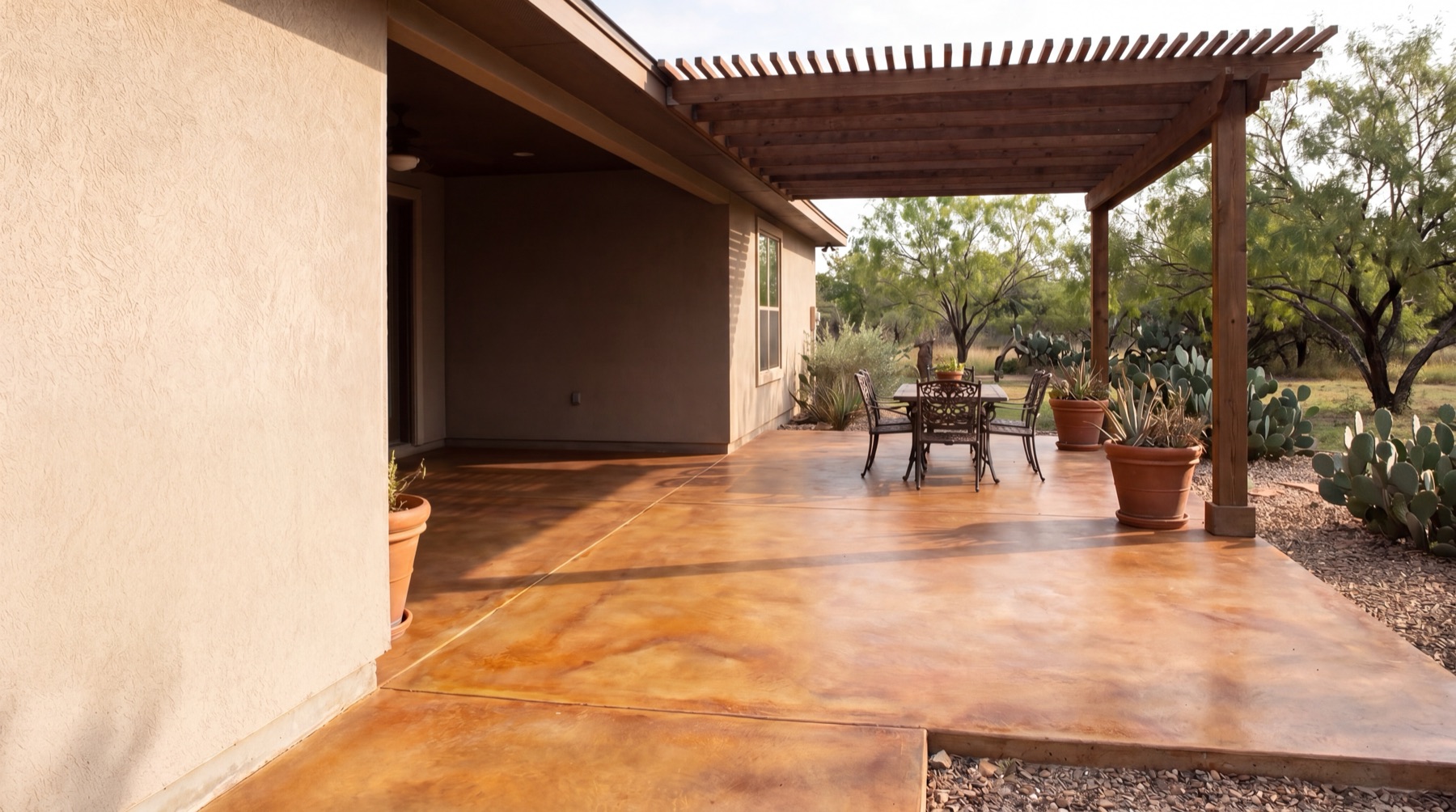
A look at our stained concrete across the Valley, including outdoor color range, interior warmth, edge conditions, and how the finished surface reads in morning and evening light.

Process

How A Stain Scope Comes Together

Color sampling matters, but prep choices matter more. This sequence keeps the finish honest to the concrete and consistent with the use case.

01

Inspect Existing Coatings

Old sealers, paint, or patch residue can change stain absorption and have to be identified early.

02

Prepare The Surface

Cleaning, grinding, or coating removal is matched to the condition of the concrete and the stain system selected.

03

Approve Tone Direction

Sample areas or known color targets help keep expectations aligned before the full floor is treated.

04

Seal For The Use Case

Outdoor, interior, and higher-traffic surfaces may need different sealer builds and maintenance expectations.

Get A Staining Estimate

Share Photos, Square Footage, And The Finish Mood You Want

The fastest way to scope a stain project is to show the current concrete and describe how much variation or uniformity you want in the final floor.

Mention existing sealer or paint if you know it. That changes the prep path immediately.
Concrete Staining FAQ

Common Questions About Stained Concrete

Not exactly. Concrete absorption, repairs, age, and prior treatment all affect how stain reads. Sampling is used to narrow the direction, but stained concrete should still be expected to carry natural variation.

Yes, often, but the outdoor sealer choice and texture expectations matter. Covered patios and shaded areas usually behave differently from open, high-sun surfaces in the Valley.

More than with a resurfacing system. Hairline variation and honest concrete character can be a strength, but heavy repairs or mismatched patches are part of deciding whether stain is the right path.

Maintenance depends on where the concrete is installed and which sealer build is used, but reseal planning is part of the conversation from the beginning rather than an afterthought.